


.png)



Enterprise procurement has shifted decisively toward cloud marketplaces. Buyers prefer solutions that consume committed budgets rather than new approvals. For independent software vendors (ISVs), co-sell with Microsoft Azure stands as one of the highest-leverage strategies to tap into those pre-allocated funds, accelerate sales cycles, and scale revenue predictably.
Co-selling aligns your go-to-market motion with Microsoft’s global field organization. Microsoft account executives and specialists actively promote validated ISV solutions that drive Azure consumption. In return, ISVs gain warm introductions, simplified procurement, and access to Microsoft Azure Consumption Commitment (MACC) budgets that enterprises must spend or risk losing discounts.
This comprehensive guide delivers a practical, step-by-step breakdown of co-sell with Microsoft Azure as it exists in 2026. You will understand program mechanics, the critical differences between Co-Sell Ready and Azure IP Co-Sell Eligible statuses, technical and revenue requirements, and proven ways to operationalize the motion for repeatable results.
For growth-stage SaaS teams managing both AWS and Azure, Missioned’s unified dual-cloud GTM platform eliminates fragmented workflows so you can focus on selling instead of platform administration.
What co-sell with Microsoft Azure really means in practice
Co-sell with Microsoft Azure is a formal, incentive-aligned partnership. Microsoft field teams collaborate with ISVs on joint opportunities, from initial discovery through deal closure. Opportunities register in Microsoft Partner Center, enabling shared account mapping, technical validation, joint presentations, and streamlined procurement through Azure Marketplace.
The program creates mutual value. Microsoft sellers earn quota credit for promoting eligible solutions that increase Azure consumption. Customers benefit from single-invoice billing and application of spend against MACC agreements. ISVs gain accelerated deal velocity and larger average deal sizes.
Microsoft unified Azure Marketplace and AppSource into a single Microsoft Marketplace platform in late 2025. This change improved discoverability while preserving co-sell mechanics. Eligible transactable offers now appear prominently to millions of monthly enterprise visitors.
Industrial insight: Co-sell deals close up to three times faster and can reach six times larger than non-co-sell transactions. Many enterprises leave portions of their MACC unspent annually, creating a substantial pool of committed budget available to properly positioned ISVs. Recent benchmarks show co-sell influenced deals delivering 30 percent larger average sizes and significant uplift in overall pipeline velocity.
Why co-sell with Microsoft Azure matters for growth-stage ISVs
Large enterprises sign multi-year Azure commitments to secure discounts and operational predictability. When your solution qualifies as MACC-eligible, buyers can procure using existing approved budgets rather than navigating new capital requests. This single change often shortens sales cycles by months.
Key advantages include:
- Access to Microsoft’s extensive enterprise relationships and trusted advisor status.
- Preferred Solutions badge for eligible listings, boosting marketplace visibility.
- Higher win rates through joint selling motions.
- Streamlined operations via Marketplace private offers and consolidated billing.
- Contribution to customer MACC commitments, making your solution a preferred choice.
Growth-stage teams rarely operate in a single-cloud environment. Balancing AWS Marketplace motions with Azure co-sell creates complexity in listings, deal approvals, CRM synchronization, and revenue recognition. A unified platform addresses these challenges directly.
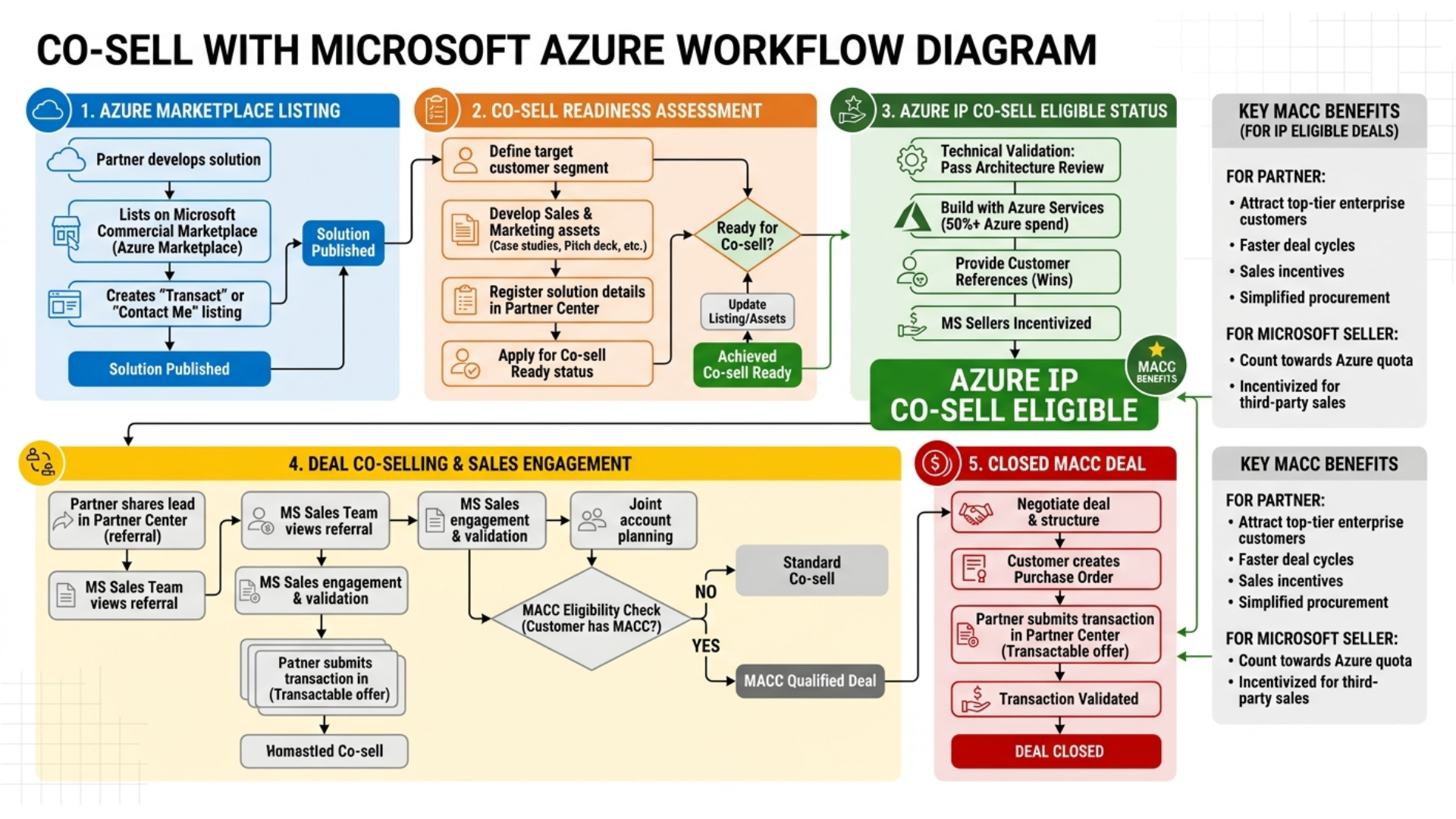
Understanding Azure co-sell statuses: Co-Sell Ready vs Azure IP Co-Sell Eligible
Microsoft structures the program in progressive tiers that unlock increasing levels of engagement and benefits.
Co-Sell Ready establishes basic visibility to Microsoft sellers. Core requirements include a published Marketplace offer, complete Partner Center business profile, co-sell collateral such as a one-pager and pitch deck, and regional sales and technical contacts. No minimum revenue threshold applies at this stage, but full referral capabilities and MACC benefits remain unavailable.
Azure IP Co-Sell Eligible represents the advanced tier that delivers maximum impact. Additional requirements after achieving Co-Sell Ready include:
- $100,000 in trailing 12-month Azure Consumed Revenue (ACR) or Marketplace Billed Sales (MBS) at the organization level. Azure credits and certain consumption offers do not count.
- Successful Microsoft technical validation confirming Azure integration depth.
- Upload of a reference architecture diagram demonstrating how your solution integrates with Azure services.
- A transactable offer on Azure Marketplace (mandatory for new offers since 2023).
This status unlocks MACC eligibility, direct quota incentives for Microsoft sellers, stronger prioritization in Partner Center tools, and the Preferred Solutions badge.
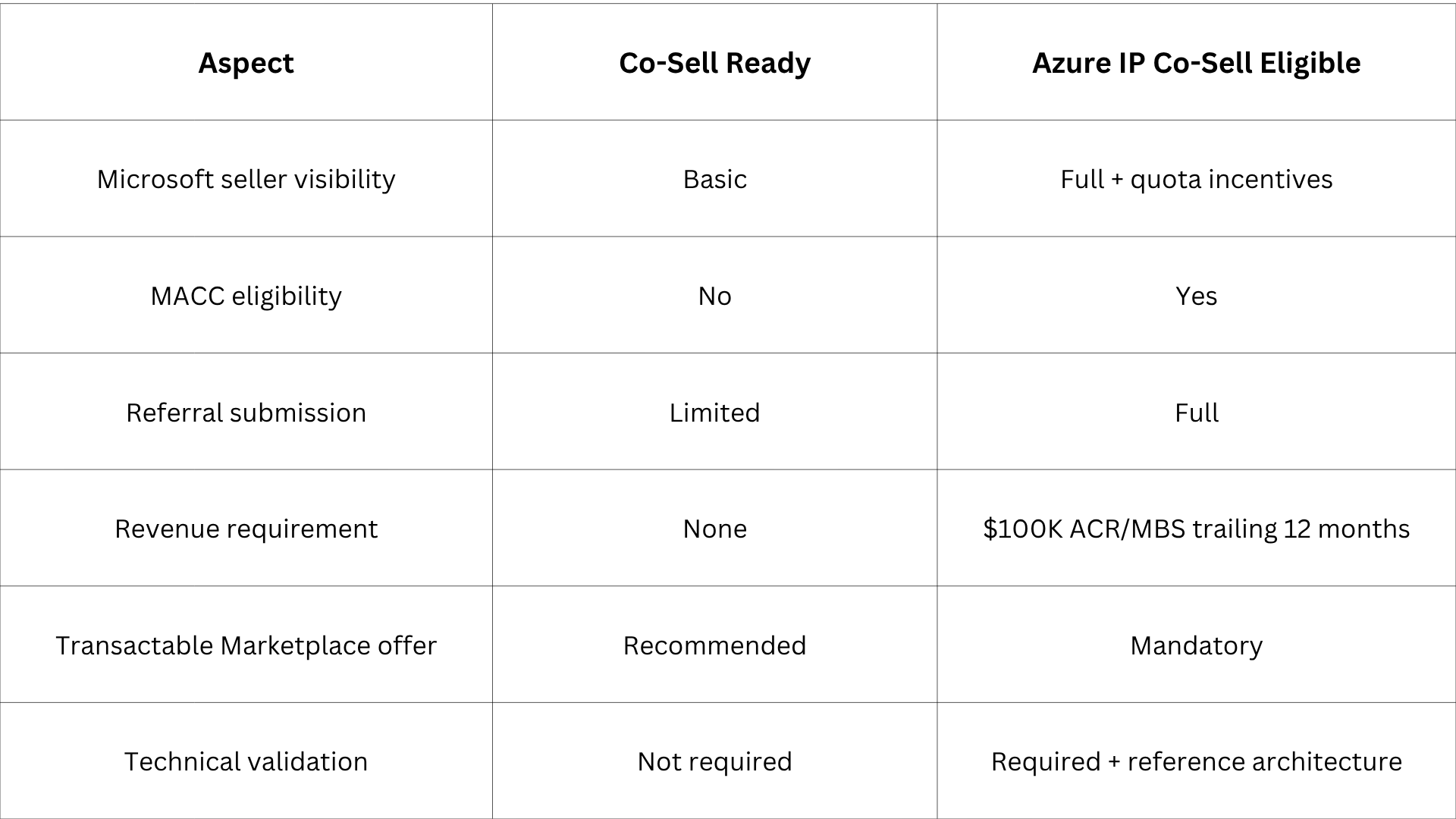
The gap between these statuses is substantial. Co-Sell Ready opens the door. Azure IP Co-Sell Eligible transforms Microsoft’s sales engine into an active extension of your team.
Step-by-step guide: How to achieve Co-Sell Ready status on Azure
Reaching Co-Sell Ready requires focused execution across several workstreams.
Step 1: Strengthen your Microsoft Partner Center foundation
Verify or create your Partner Center account. Complete the full business profile, enroll in relevant competency programs, and ensure accurate company information.
Step 2: Publish and optimize your Azure Marketplace listing
Craft compelling titles, long and short descriptions, screenshots, videos, and pricing models. Highlight Azure integrations clearly. Use AI-assisted content generation where available to align with marketplace ranking algorithms.
Step 3: Develop high-quality co-sell collateral
Create a solution one-pager and pitch deck that articulate the “better together” narrative. Emphasize how your product drives Azure consumption, reduces customer risk, and delivers measurable business outcomes.
Step 4: Provide complete contact and support information
Submit regional sales, technical, and customer success contacts. Microsoft uses this data to route opportunities effectively.
Step 5: Enable transactability
Configure billing through Microsoft to support private offers and future IP eligibility.
Many ISVs complete this phase within weeks when supported by streamlined tooling. Missioned accelerates listing creation and content optimization across both Azure and AWS, minimizing manual effort.
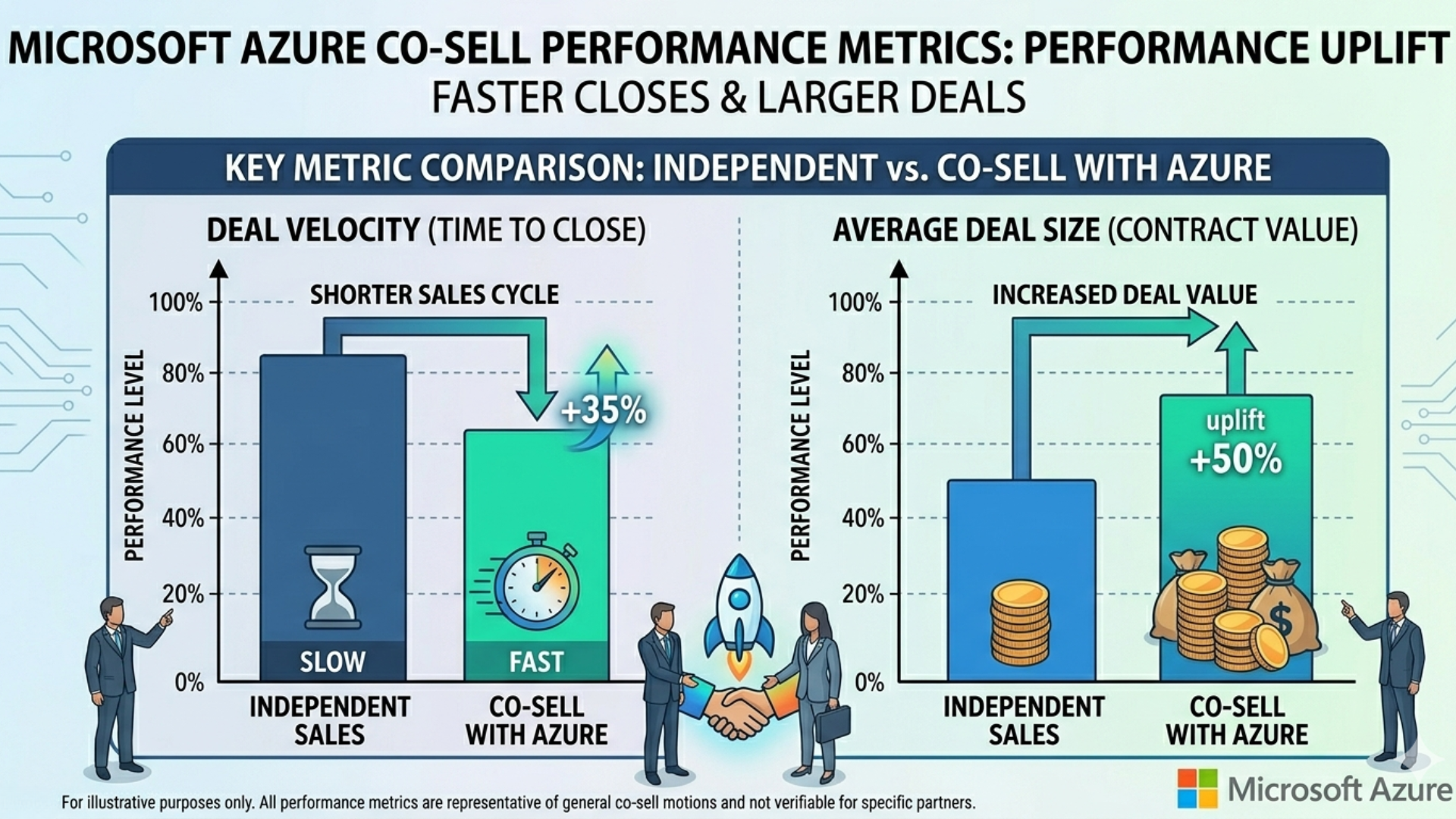
Advancing to Azure IP Co-Sell Eligible and unlocking MACC benefits
Progressing beyond Co-Sell Ready demands revenue momentum and technical proof points.
Focus first on generating the required $100,000 in qualifying Azure revenue through initial Marketplace transactions or consumption. Simultaneously, prepare and submit your reference architecture diagram and complete technical validation.
Once approved, your offer becomes MACC-eligible. Enterprise customers can apply purchases directly against their committed Azure spend. This benefit proves especially powerful during Microsoft fiscal year-end periods when organizations face strong pressure to utilize budgets.
Private offers on Azure Marketplace allow customized terms, multi-year commitments, and bundling while preserving full MACC credit. This flexibility supports complex enterprise negotiations without sacrificing marketplace advantages.
Operational playbook: Turning co-sell status into consistent pipeline and revenue
Status alone does not generate revenue. Operational excellence drives results.
Develop and maintain “better together” assets
Regularly refresh battle cards, case studies, ROI calculators, and architecture diagrams. Ensure every piece ties your solution explicitly to Azure value.
Align on ideal customer profiles and target accounts
Share mutually agreed target segments with Microsoft Partner Development Managers and account executives. Joint account mapping sessions identify high-potential opportunities.
Register opportunities early and maintain hygiene
Log deals promptly in Partner Center. Provide timely updates on status, next steps, and blockers to keep Microsoft teams engaged.
Execute joint customer motions
Prepare for collaborative demos, proofs of concept, technical workshops, and executive briefings. Co-hosted events amplify credibility.
Measure, learn, and iterate
Track key metrics including registered opportunities, co-sell win rate versus direct win rate, average deal size, pipeline velocity, and MACC transaction contribution. Use Partner Center insights and CRM data for continuous improvement.
Successful ISVs treat co-sell as a dedicated revenue channel with clear ownership, regular cadence reviews, and cross-functional alignment between sales, product, and partner teams.
Common challenges ISVs face and proven solutions
Many teams encounter predictable hurdles:
- Generic collateral that fails to demonstrate Azure-specific value.
- Inconsistent pipeline updates leading to lost momentum.
- Manual data entry across portals and CRMs creating errors and delays.
- Difficulty scaling technical documentation and compliance efforts.
Dedicated platforms resolve these issues. Missioned’s capabilities in co-sell automation, private offers management, and marketplace CRM integration keep your team in familiar tools while automating backend complexity.
How Missioned powers dual-cloud co-sell success across Azure and AWS
Growth-stage SaaS companies need unified infrastructure. Missioned delivers a single platform for listings, deal workflows, compliance, CRM synchronization, and revenue operations across both major cloud marketplaces.
Key Missioned advantages:
- Manage private offers and approvals directly from email.
- Bidirectional CRM sync with Salesforce, HubSpot, and other systems.
- Automated technical documentation and partner program submissions.
- Accurate revenue attribution and pre-billing validation.
- AI-powered content generation tailored to each marketplace.
Teams using Missioned report faster time-to-first-revenue and reduced operational overhead. Explore cloud compliance automation and marketplace revenue operations automation to see how the platform scales with your business.
Measuring and optimizing your Azure co-sell performance
Define success with clear KPIs:
- Volume of registered co-sell opportunities.
- Win rate differential between co-sell and direct motions.
- Average deal size and sales cycle length.
- Percentage of revenue flowing through MACC-eligible transactions.
- Microsoft seller engagement scores and repeat collaboration rates.
Regular reviews with Partner Development Managers and data-driven adjustments separate top performers from average participants. Many ISVs achieve 2x deal velocity and significantly higher win rates once the motion matures.
Real-world examples and industrial benchmarks
ISVs such as Weka have leveraged co-sell to build strong pipelines and close deals with Fortune 1000 companies, reporting up to 20x pipeline increases in targeted segments. Datometry made Microsoft Marketplace their primary channel, strengthening position through consistent co-sell participation.
Broader industry data confirms the opportunity. Microsoft’s ecosystem continues expanding, with cloud commits showing strong growth and partners closing billions in co-sell influenced revenue.
Conclusion
Co-sell with Microsoft Azure provides ISVs a clear path to larger, faster enterprise deals by leveraging committed MACC budgets and Microsoft’s sales capacity. Moving from Co-Sell Ready to Azure IP Co-Sell Eligible unlocks the program’s full potential, including seller incentives and procurement advantages.
For teams operating across AWS and Azure, fragmented tools create unnecessary friction. Missioned’s purpose-built dual-cloud GTM platform streamlines every aspect so your revenue teams stay focused on high-value activities.
The opportunity is substantial and time-sensitive. Enterprises continue increasing cloud commitments, and those who execute co-sell effectively capture disproportionate share.
Ready to build or scale your partner-led revenue motion? Book a GTM session with the Missioned team. We will review your current Azure and AWS setup and deliver a customized 90-day action plan. Book a GTM Session or start with a free readiness assessment.
FAQ
What is the main difference between Co-Sell Ready and Azure IP Co-Sell Eligible?
Co-Sell Ready provides initial visibility to Microsoft sellers. Azure IP Co-Sell Eligible adds quota incentives, MACC eligibility, and stronger prioritization after meeting the $100,000 revenue threshold, technical validation, and transactability requirements.
How long does it typically take to reach Azure IP Co-Sell Eligible status?
Many ISVs achieve Co-Sell Ready in weeks and IP Eligible status within a few months once they generate qualifying revenue and complete technical requirements.
Does co-sell with Microsoft Azure require a transactable Marketplace offer?
Yes for IP Co-Sell Eligible status and full MACC benefits. Transactable offers enable private offers and count toward customer consumption commitments.
Can Missioned help ISVs manage both Azure co-sell and AWS Marketplace motions?
Absolutely. Missioned offers unified capabilities for listings, deals, CRM integration, compliance, and revenue operations across both clouds from a single platform.
What metrics should ISVs track for co-sell success?
Focus on registered opportunities, win rate, average deal size, sales cycle length, MACC transaction percentage, and Microsoft seller engagement levels.
How do MACC benefits work in co-sell deals?
Eligible purchases apply against the customer’s committed Azure budget, simplifying procurement and accelerating closes while helping Microsoft meet consumption targets.