
The pipeline most SaaS teams do not know they are leaving behind
Cloud providers have field sales teams with thousands of enterprise relationships. Those teams actively refer deals to SaaS partners they trust, sell alongside them, and help close business that neither party would have reached alone. Most SaaS companies never access this because they do not know it exists, or because they never set up the foundation that makes it available.

Why most teams never activate it
It is that activating co-sell requires a specific set of steps that most teams either do not know about or do not have the operational capacity to execute correctly.


What the co-sell opportunity actually looks like
Co-sell is not a partnership program in the traditional sense. It is a structured motion where cloud provider field teams bring your product into active deals they are already running with enterprise customers. The buyer already trusts the cloud provider.

Co-sell referrals come from buyers who are already inside a procurement cycle with a cloud provider they rely on. The intent is real, the budget is allocated, and the relationship with the cloud provider does the heavy lifting that your sales team would otherwise have to do from scratch.

Enterprise buyers purchasing through a co-sell motion tend to commit more. They are drawing from pre-approved cloud budgets, the procurement process is streamlined, and the cloud provider's involvement adds a layer of credibility that direct outreach cannot replicate.

Every co-sell referral is inbound pipeline your sales team did not have to generate. As your relationship with the cloud provider deepens, the volume of referrals grows without a proportional increase in headcount or outbound effort.

When a cloud provider field rep is actively involved in a deal alongside your team, the enterprise buyer's internal approval process moves faster. The cloud provider's existing relationship removes friction that would otherwise slow the deal down significantly.
What Missioned activates for you
Missioned manages the end-to-end co-sell motion so your team can engage with cloud provider field teams and close referral pipeline without building a dedicated partner operations function to run it.
Before any opportunity is registered, Missioned confirms your listing meets the eligibility criteria required by the cloud provider's partner program. If gaps exist, they are addressed before submission so the process does not stall at the first step.
Registering a co-sell opportunity requires structured information submitted in the right format through the right channel. Missioned handles that submission so opportunities are registered correctly, accepted quickly, and visible to the right cloud provider field teams from the start.
A registered opportunity that goes unmanaged goes cold. Missioned tracks every registered opportunity, monitors its status, follows up with cloud provider contacts where needed, and keeps your sales team informed so deals keep moving without falling into a gap nobody is watching.
Every co-sell opportunity, its registration status, and its current stage syncs directly into your CRM. Your sales team sees co-sell pipeline alongside direct pipeline in the same view they already use, without logging into a partner portal to find out what is happening.
Co-sell revenue is only meaningful if it is measured correctly. Missioned structures co-sell reporting so leadership can see referral volume, deal velocity, acceptance rates, and revenue attribution across the co-sell motion without manually reconciling data from multiple sources.
A live listing is not the finish line. The difference between one that generates pipeline and one that sits idle comes down to what happens in the setup.
See how it worksWhat your team gains when co-sell is running
A properly activated co-sell motion changes the shape of your pipeline in ways that compound over time. The longer your relationship with the cloud provider field team runs, the more referrals arrive, the faster deals move, and the more your marketplace channel performs relative to the effort your team puts in.

Joint selling removes procurement friction. When a cloud provider field rep is involved, the buyer's internal approval process accelerates because the relationship and trust are already in place.
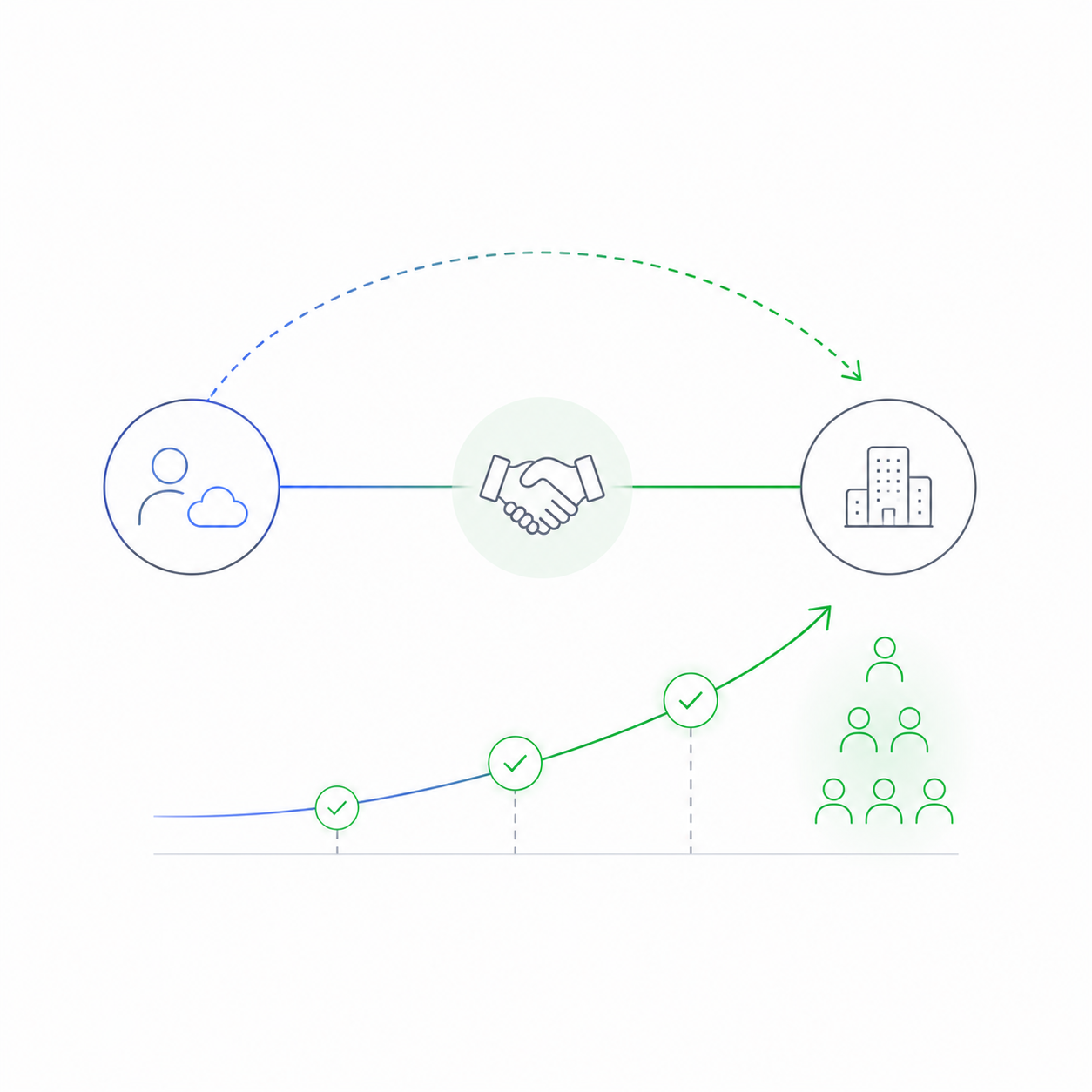
Cloud provider field teams prioritise partners who engage consistently and close the deals they are referred. Every successful co-sell deal strengthens your standing and increases the likelihood of more referrals.

Knowing how much of your revenue comes from co-sell, which cloud provider is driving it, and how that compares to direct and outbound pipeline is the kind of visibility that informs your next GTM investment.
Co-sell referrals arrive because your listing is set up correctly and your partner relationship is active, not because your team sent another sequence. That is a fundamentally different kind of pipeline.
- Qualified co-sell opportunities surfaced
- Referral pipeline without outbound
- Partner sourced deals increase
- Better visibility into co-sell

From listed to co-sell active, without building a team to run it
Co-sell is where the marketplace channel starts compounding. Everything Missioned builds before this, your listing, your offers, your CRM connection, and your compliance clearance, is what makes this possible.
Book a GTM Session
Frequently asked questions
Being listed on a cloud marketplace makes your product discoverable to buyers browsing the platform. Co-sell is a separate, more powerful motion where cloud provider field sales teams actively refer deals to you and sell alongside your team in live enterprise opportunities. The difference in deal quality, size, and velocity between a buyer who finds your listing organically and one who arrives through a co-sell referral is significant. Co-sell is the channel that marketplace veterans are actually talking about when they describe the real revenue opportunity in cloud marketplaces.
ACE stands for AWS Customer Engagements and is the program through which co-sell opportunities are registered and managed with AWS. It is the operational infrastructure behind the co-sell motion on that platform. You do not need to understand the mechanics of ACE to benefit from co-sell. Missioned manages the registration, submission, and follow-up process within ACE on your behalf so the program works for your team without requiring your team to become experts in how it operates.
Yes. Co-sell eligibility requires that your listing meets specific criteria set by the cloud provider, which includes passing their compliance review process. Missioned manages compliance readiness as a capability that runs before co-sell activation, so by the time your team is ready to register opportunities, the eligibility requirements are already in place.
Every co-sell opportunity registered through Missioned syncs directly into your CRM alongside your direct pipeline. Your sales team sees co-sell deals in the same view they use to manage everything else, with status updates, stage progression, and activity tracked automatically without manual input or portal logins.
Missioned monitors every registered opportunity and follows up with cloud provider contacts where deals stall or go quiet. Your team is notified when action is required on your side and Missioned handles the partner-facing communication so opportunities do not fall through gaps in a process nobody is actively watching.
The timeline depends on where you are starting from. If your listing is already live and your compliance review is complete, activating co-sell is a matter of weeks. If those foundations are not yet in place, Missioned builds them first before moving to co-sell activation. The full journey from unlisted to co-sell active typically takes less time with Missioned than most teams spend on listing setup alone when they go through it without guidance.
Missioned provides reporting across referral volume, opportunity acceptance rates, deal velocity, and revenue attribution so leadership always has a clear picture of how the co-sell channel is performing relative to direct and outbound pipeline. That visibility is what allows you to make informed decisions about where to invest in the partner relationship going forward.
Find out where you stand
Before you decide anything, get a clear picture of your current setup, what it would take to get listed, and whether you qualify for co-sell today.